
A swan-shaped birthmark
Healing fiction and the aesthetic work of active imagination

She and her husband are standing in a room in a house that they are preparing to sell. It’s a house they haven’t lived in for years—the one that is across the street from Owl’s Liquors. The house they are in is an imaginarium of that house. It is larger and doesn’t have as many windows and it is neither newer nor older than that house. The house across the street from Owl’s Liquors, the house where their daughter was born, shows up in all kinds of ways.
There is a man in the room working on the walls. He isn’t painting them, he is bathing them, as if they were skin. The house is cleared of furniture. All around, there are faint stains, and she has a memory of neglect—a knowing of a time when the house was not tended to, a time when she forgot it, even as she lived in it—and now, looking at the cleansed walls and floors, she feels a painful love for the house that would soon not be hers.
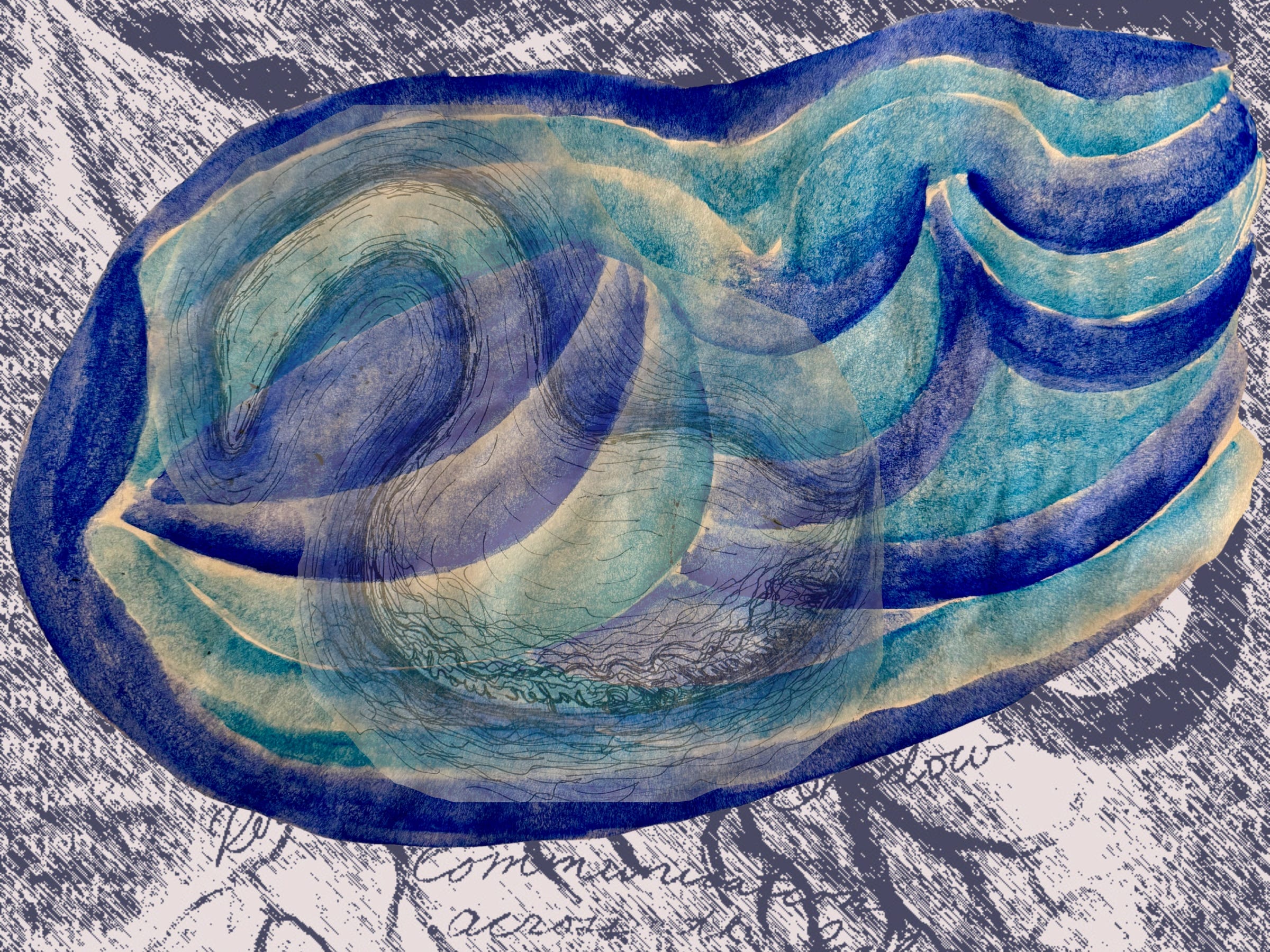
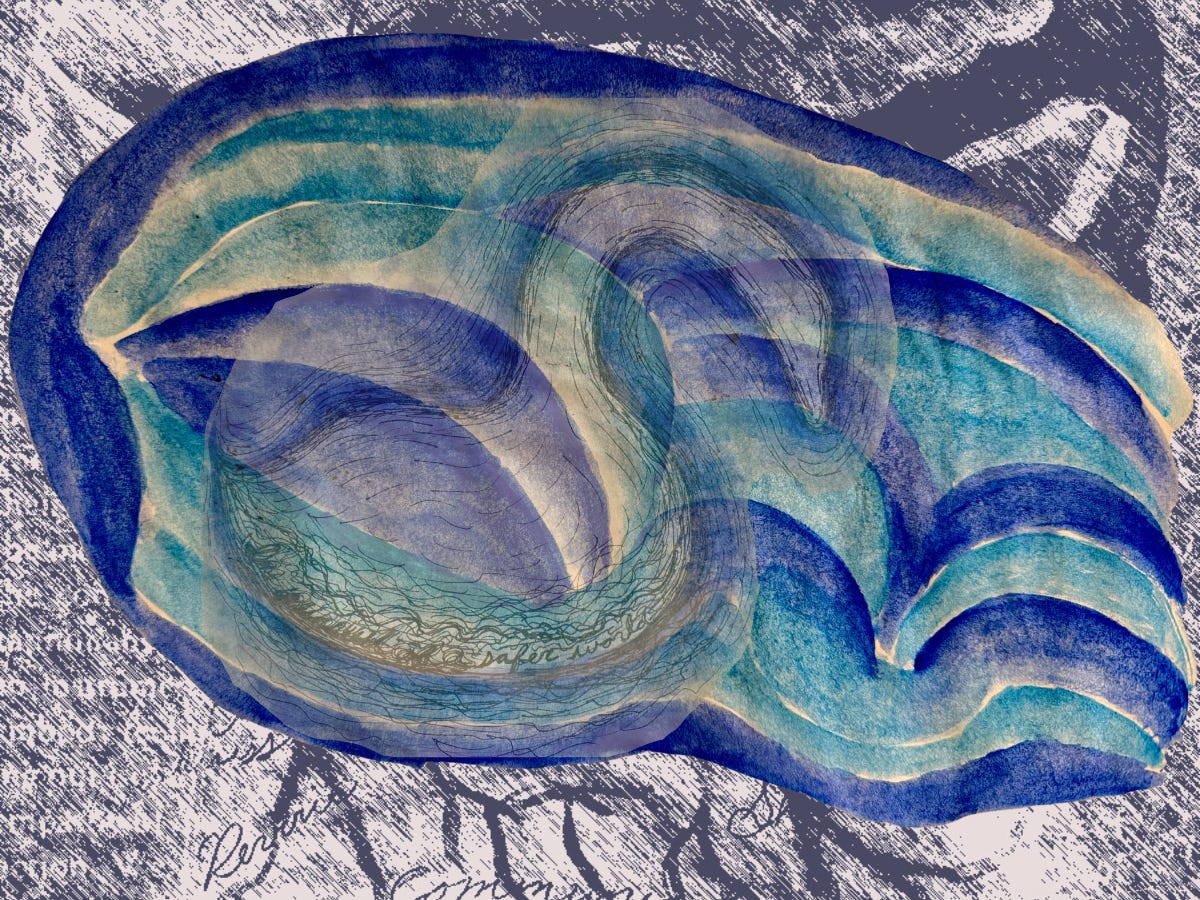
What does this have to do with the goose? With the swan? I entered three tildes and this third space opened up.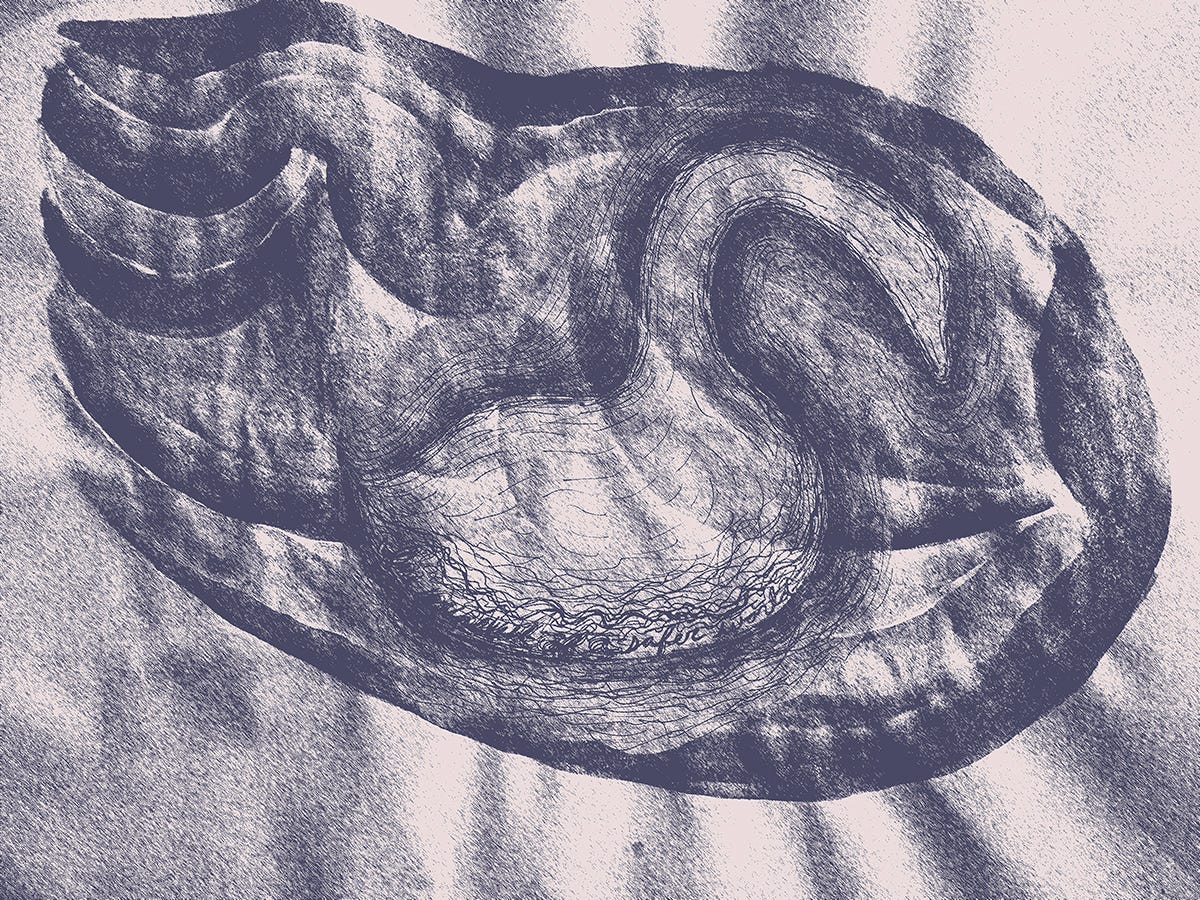
Type three waves to enter the third space.The last part of a poem emerged from the morning inbox:
The Swan, No. 20 (Hilma af Klint)
                       ...It survives by curving. Beauty is beauty because it
doesn’t have a guardian. Because it doesn’t have memory. Because
it’s wordless and it curves. Beauty just becomes, whether it is
witnessed or not. Because beauty is both the source and the
disappearance, it hurts so much when we get there.
I wrote in cursive, in the belly of the swan, notes from class: In pursuit of a safer world. I obscured "In pursuit", so that it is difficult to read, but "a safer world" is legible.

It survives by curving.
She imagines bathing an off-white wall, her skin’s color, with a soft cloth. She imagines that there is a faint stain that remains. A birthmark.
Such would be to demean the daimons into personal servants whose concern must then be with problem-solving those delusions we call realities because we have not seen through to their fantasies, their guiding images that project them along. (Hillman, 1994, p.79)
This mechanistic view of attention would prove useful in contexts far removed from battle. In casinos, for one: A new generation of electronic slot machines used carefully calibrated feedback to induce what the anthropologist Natasha Dow Schüll has called the “machine zone,” a state of passive, frictionless and highly addictive engagement that kept gamblers’ eyes glazed and their hands on the lever. (Burnett et al., 2026, para. 21)
“machine zone”
A state of passive, frictionless and highly addictive engagement
Eyes glazed and hands on the lever
Kills the mother over and over again
Even as the mother is trying to escape
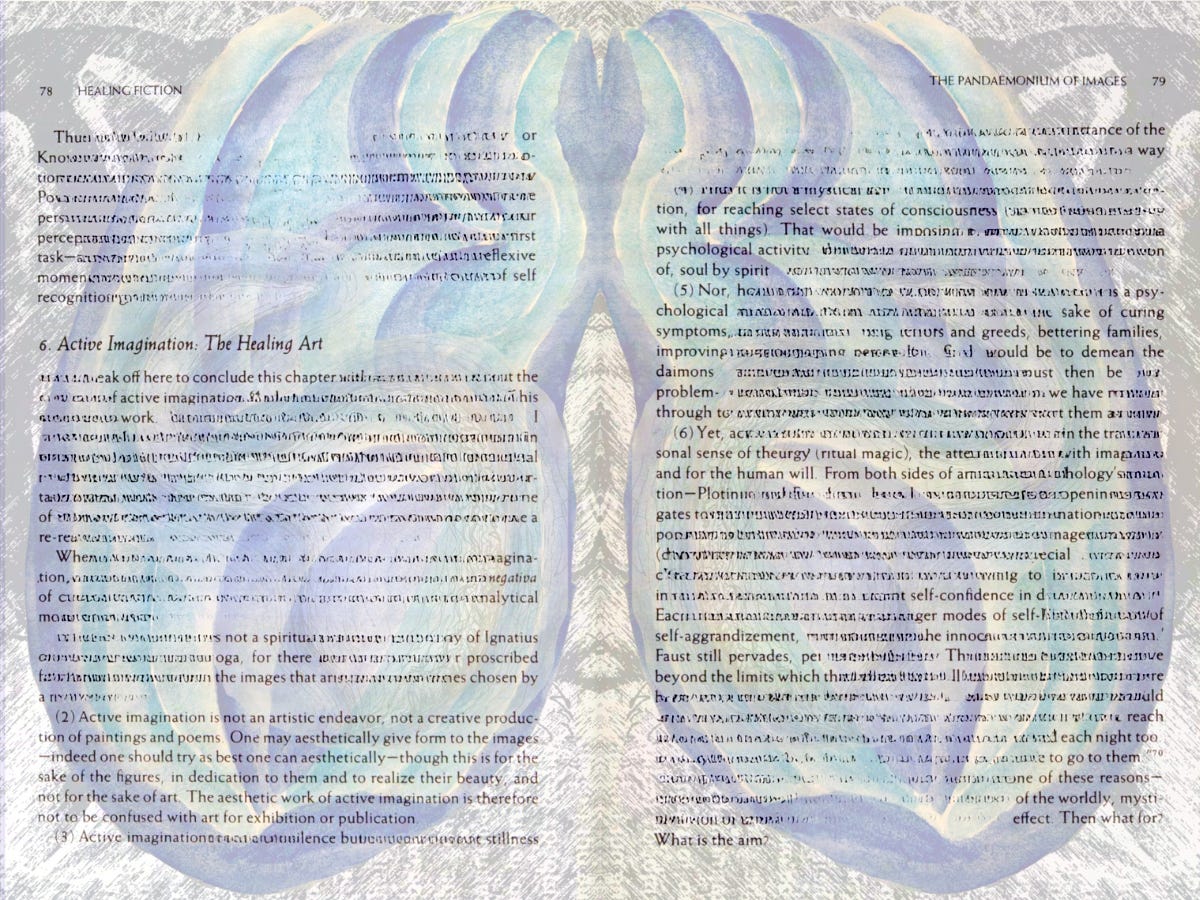
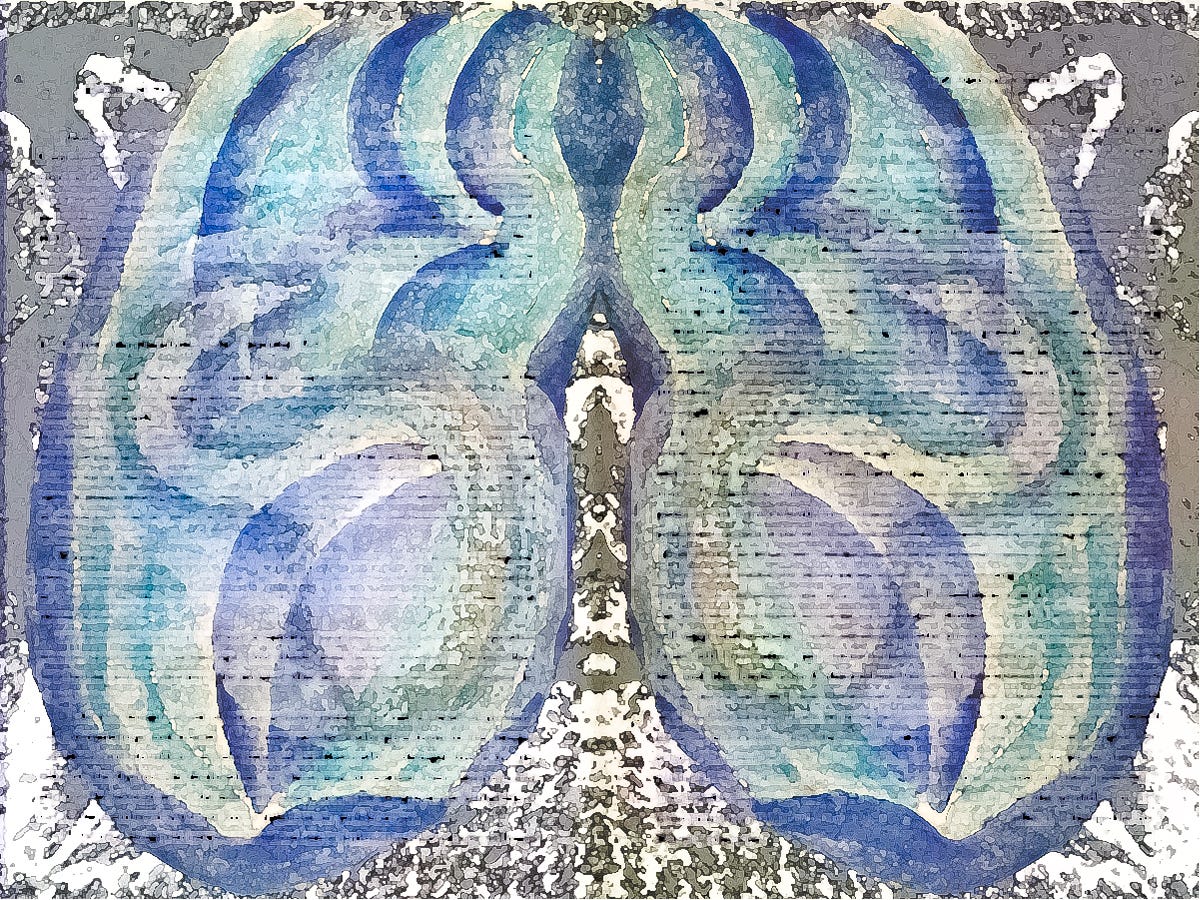
She was born with a birthmark the shape of a swan above her temple, in the margins behind her hairline. The swan was bulbous and red—an angry looking bird plucked of its feathers, and there was a chance it could become cancerous, so her parents arranged for it to be removed when she was in her late teens.
The suture line, where the skin had been stretched over and sewn together to bridge the absence of the birthmark, hurt deeply. There was talk then about whether she felt pain more acutely than others. Perhaps this is because, outwardly, the wound did not appear to be significant enough to cause as much pain as it was causing her. There seemed to be an understanding of a normal amount of pain that a wound such as hers would cause. Or that pain could be assessed through evidence in superficial layers.
She imagines a chart of all the wounds with their corresponding pain amounts. A chart that someone could consult to see if they were experiencing normal pain for their particular wound. And if their pain were greater than normal?
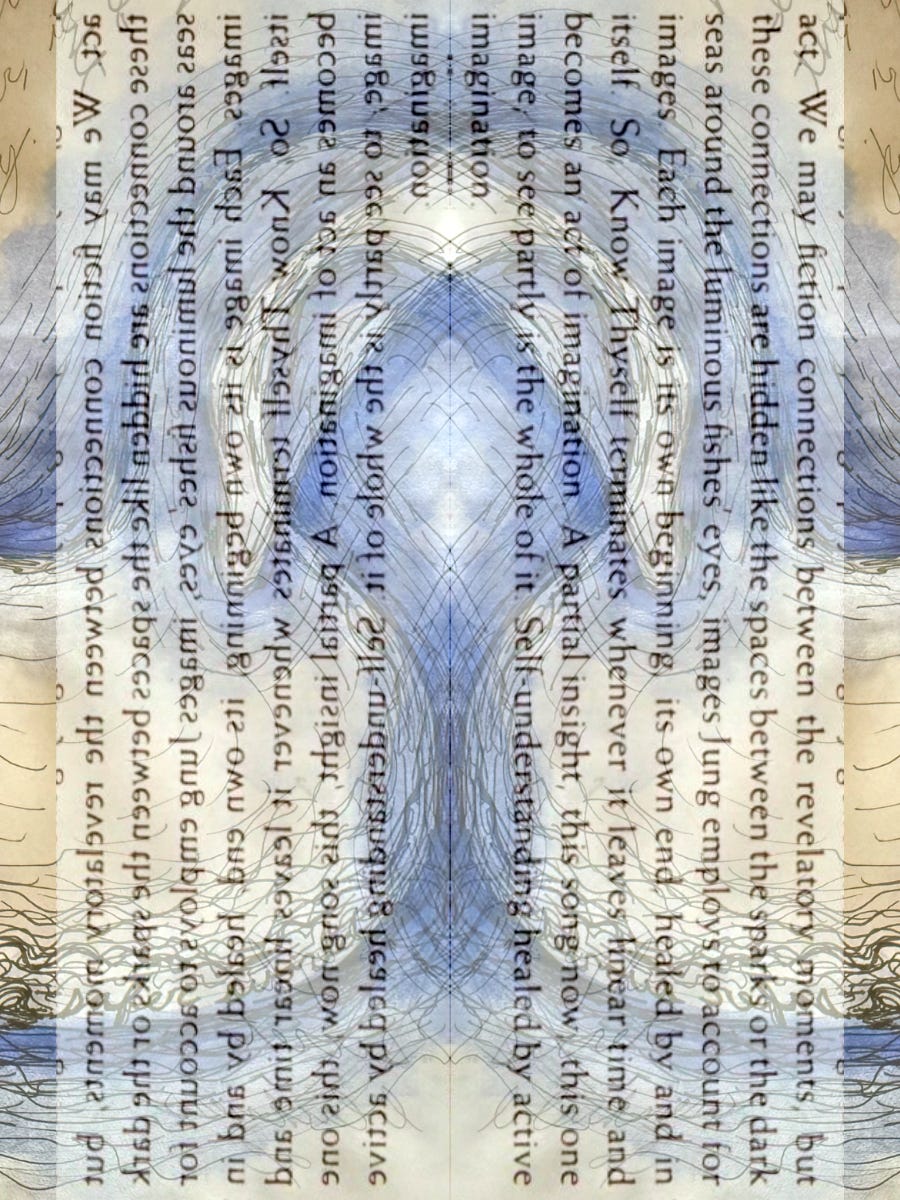
Active imagination is not an artistic endeavor, not a creative production of paintings and poems. One may aesthetically give form to the images-indeed one should try as best one can aesthetically-though this is for the sake of the figures, in dedication to them and to realize their beauty, and not for the sake of art. The aesthetic work of active imagination is therefore not to be confused with art for exhibition or publication. (Hillman, 1994, p.78)
[…] Jung’s method of interior imagining is for none of these reasons-spiritual discipline, artistic creativity, transcendence of the worldly, mystical vision or union, personal betterment, or magical effect. Then what for? What is the aim? (Hillman, 1994, p.79)
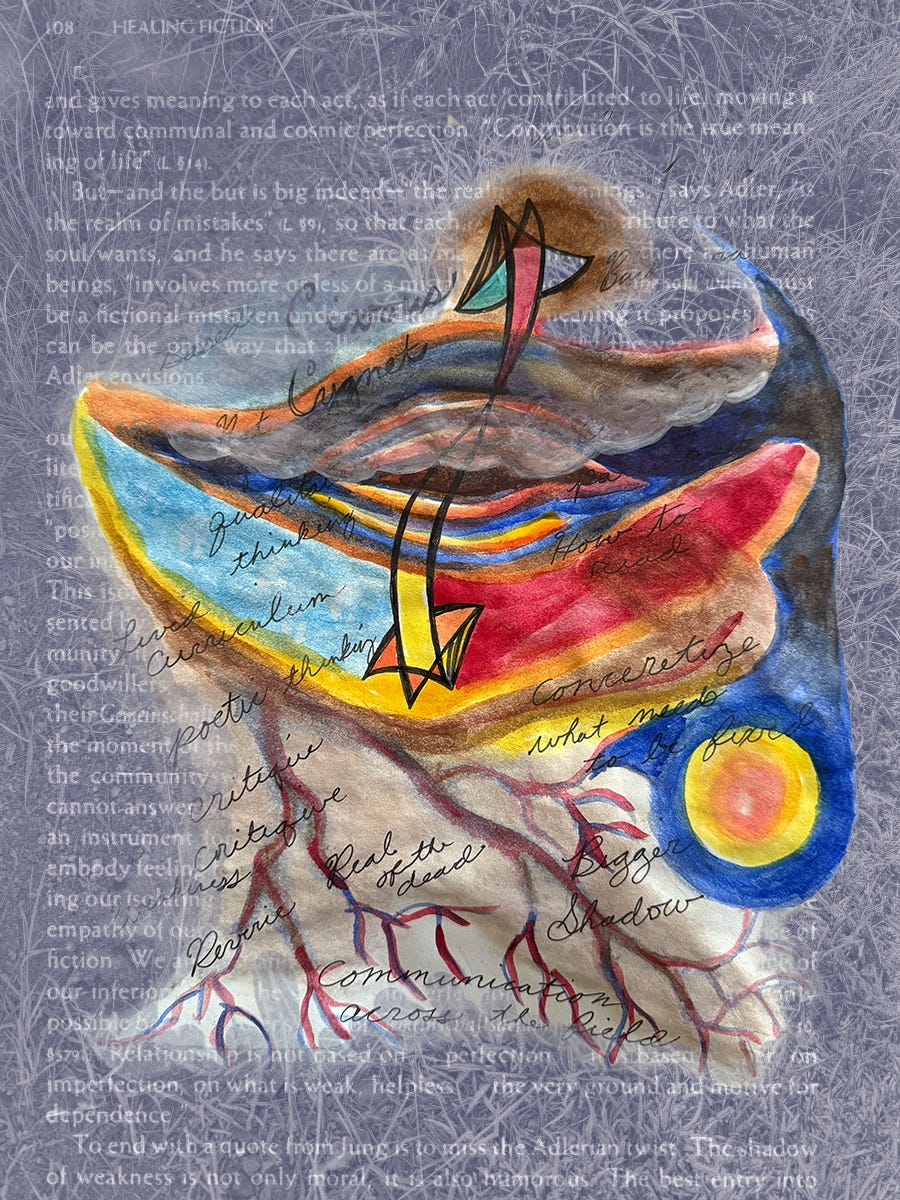
On the ethical level, in self-fragilisation the I contacts the vulnerability in the other, neighbour and stranger all throughout life. (Ettinger, 2010, p.2)
suture(n.)
early 15c. (Chauliac), "act of sewing," specifically "surgical stitching of the lips or edges of a wound, etc.," from Latin sutura "a seam, a sewing together," from sutus, past participle of suere "to sew" (from PIE root *syu- "to bind, sew").
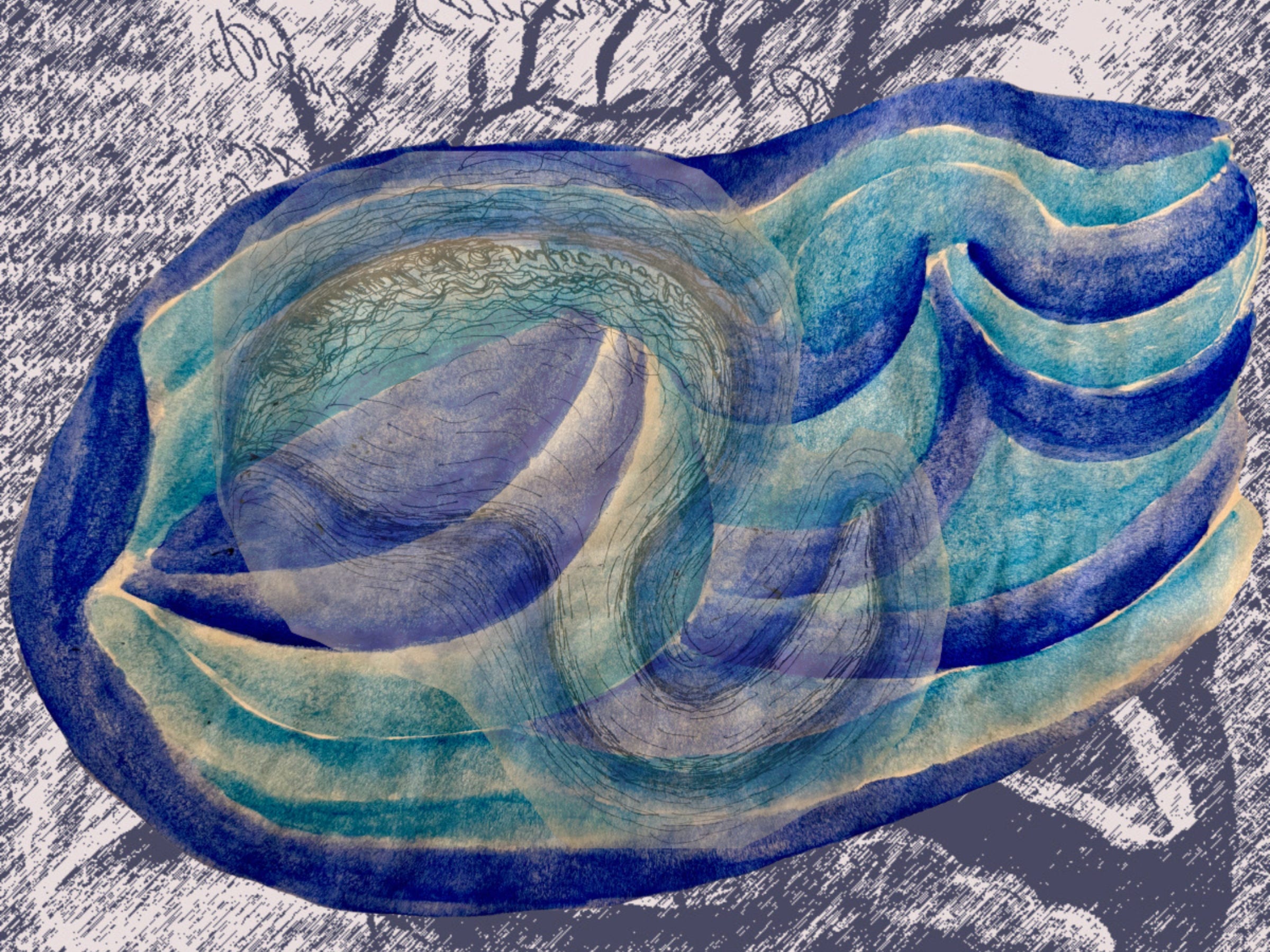
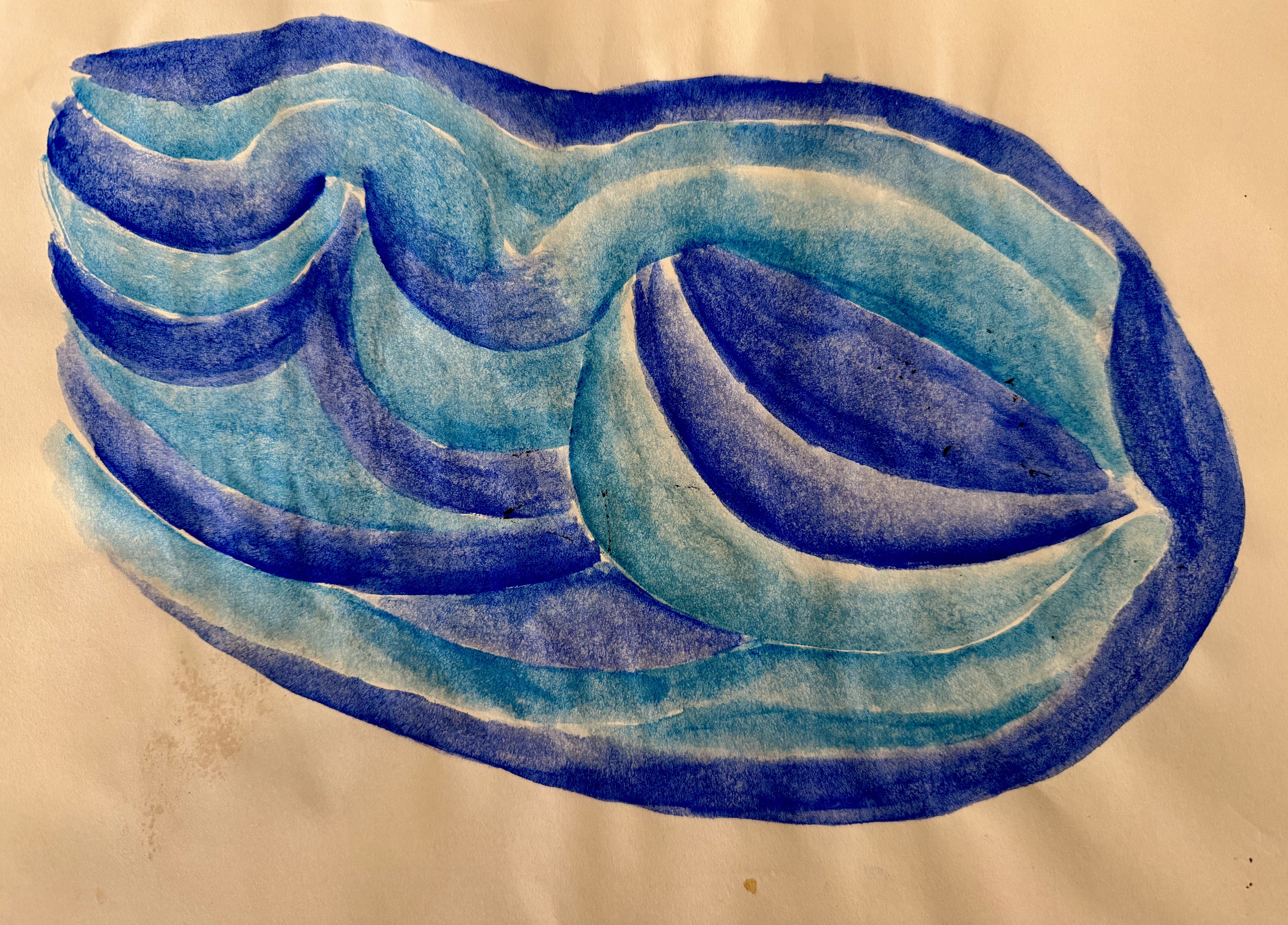
She carries a travel-size watercolor set swaddled in an off-white napkin printed with rustic fonts. In the waiting room, she unwraps the set and paints the outline of a swan. The white swan is formed by the blue pigment around it. Its body emerges from a revelatory moment of water.
Watercolor paint is vulnerable to water. The hand is vulnerable to the body’s muscle and ligature to bone, itself vulnerable to marrow. The child is vulnerable to the mother. The mother is vulnerable to the child. The face is vulnerable to collapses and wrinkles around matter’s disintegration to spirit. My, how I’ve aged, she thinks while writing this.
A birthmark, severed years ago from her scalp, emerges a fish eye in the sea.
References
Burnett, D. G., Loh, A., & Schmidt, P. (2026, January 10). Opinion | The ‘attention economy’ is a lie. The New York Times. https://www.nytimes.com/2026/01/10/opinion/attention-world-war-2-technology-nazis.html
Chang, V. (2025, October 23). The Swan, No. 20 (Hilma af Klint). The New York Review of Books, 72(16). https://www.nybooks.com/articles/2025/10/23/the-swan-no-20-hilma-af-klint-victoria-chang/
Ettinger, B., (2010) “(M)Other re-spect: Maternal subjectivity, the ready-made mother-monster and the ethics of respecting”, Studies in the Maternal 2(1), 1-24. doi: https://doi.org/10.16995/sim.150
Hillman, J. (with Internet Archive). (1994). Healing fiction. Dallas : Spring Publications ; [United States] : Distributed by Continuum Pub. Group. http://archive.org/details/healingfiction0000hill
Suture—Etymology, Origin & Meaning. (n.d.). Etymonline. Retrieved January 11, 2026, from https://www.etymonline.com/word/suture